

Telecommunications subscribers should not expect a sudden improvement in quality of services irrespective of data or office because the challenges confronting the telecoms operators will just not be solved with a wave of the hand.
According to MTN Nigeria Plc, capital expenditure, otherwise known as CAPEX, is a major challenge that the operators grapple with every year due to the huge investment that they need to provide for telecoms infrastructure, which is the backbone of the industry.
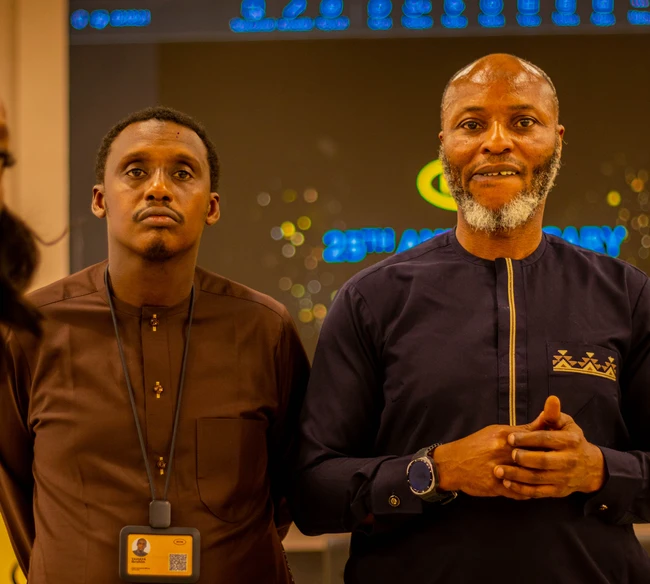
Chief Financial Officer, MTN Nigeria Plc, Mr Modupe Kadri told journalists at the Mid-Year Y’elloverse Catch-up that “the telecoms industry is highly capital intensive. The only way we can get that quality of service that we so desire is to continuously invest in the network.”
He said, “I used to work in a cement plant. You have a capex, you build a new line, and then you continue to just use operational maintenance to keep the line running. So you have a bubble of capex,” adding, “There are a lot of other businesses where you do capital expenditure in bubbles.”
Who addressed journalists alongside the Chief Technology Officer, Mr Yahaya Ibrahim, and gave insights into the MTN Nigeria financial books revealed that “in this industry, you have to spend, so that’s why you see the capex intensity. The capex intensity is just the capex spent divided by the revenue, so it’s about 21 per cent.”
Kadri explained further that MTN Nigeria spends 21% of her earnings to generate CAPEX, adding that “out of the 24% that we are giving, the board only declared 26 million out of 18.8%”.
Notwithstanding the challenges of CAPEX, he said that from January to date, “We’ve paid N622 billion in taxes and loans”, adding that “2.5% of the levy goes to the NCC.”
Harping on the protection of telecoms infrastructure, he said, “Oftentimes, you don’t necessarily build a factory in a built-up area. You build it in the outskirts, which then means that we have to make investments.”
He added, “Every time you know that you don’t have the signal, it either is a blind spot or it is shutting down, or whatever it is saying is that “there are also some factors that are beyond our control.”
Reacting to some hiccups that subscribers go through when using telecommunications services, he said that “what we’ve now discovered is that you cannot give the peak optimal experience you want if everything remains on a mobile network.
“So, even though you have broadband speeds, the next thing you need to do is actually add the physical fibre infrastructure to home. So, if you develop very much IP, for instance, everybody has routers.
“You have routers; usually it’s not a good experience. But when you do it, you have three kids in the house, mother, father, and everybody on the device; matching it, you will probably need a better experience. And that’s what we find by X in fibre-to-the-home.”
Kadri stated that fibre and investment remain key to MTN Nigeria, saying that “we know that when we talk to our colleagues abroad or we go to Europe, every household actually has a fibre connection.”